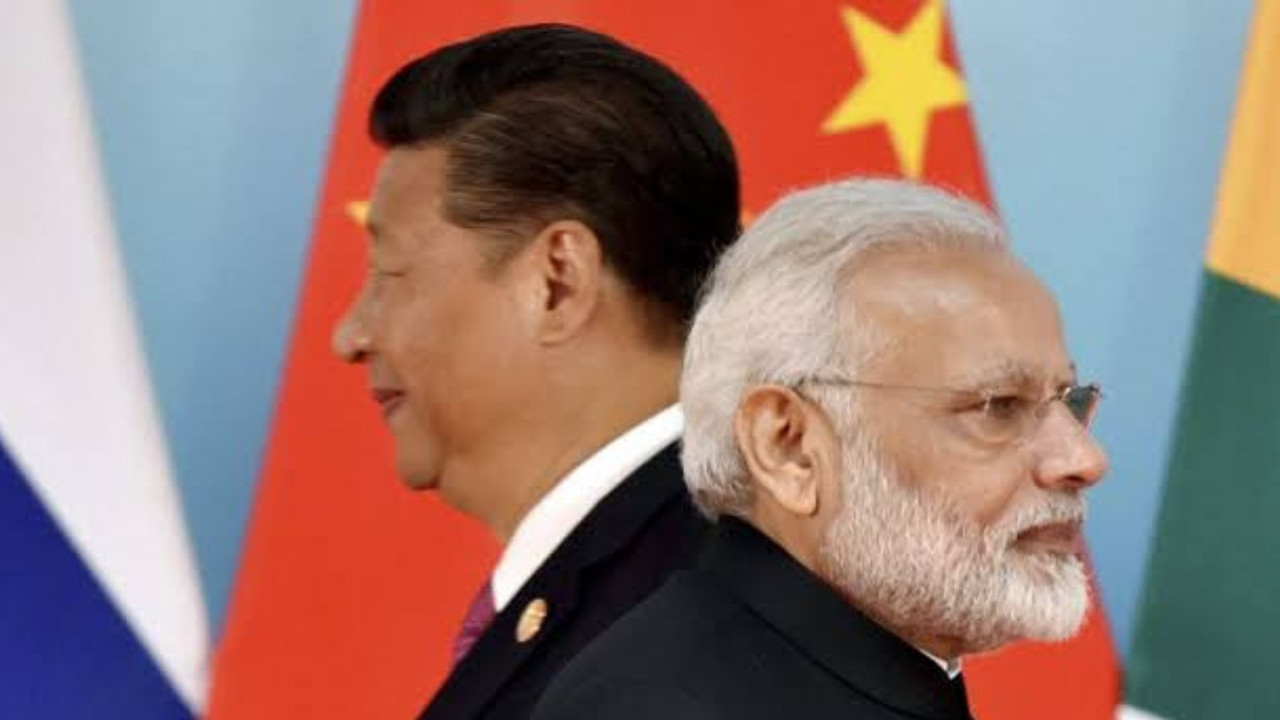
China is the king of global manufacturing. For years, no other nation has been able to challenge the Chinese domination of the global market. (Image X @OsintUpdates)
New Delhi: China is the king of global manufacturing. For years, no other nation has been able to challenge the Chinese domination of the global market. The secret to its continued status as the world's manufacturing hub is no longer cheap labour. The credit goes to its tremendous productivity, vast ecosystem, and speed.
Even though factory workers' wages in China have become higher than in many other Asian countries, its factories still produce the most goods worldwide. This is because Chinese workers do more work in less time and maintain high quality. Furthermore, China has created a robust manufacturing ecosystem where suppliers, logistics, and technology are all integrated. This makes it very expensive and difficult for companies to move their operations from China to anywhere else. India is still far behind the Dragon in this regard.
There was a time when China was called the world's factory because labour was very cheap there. But that is no longer the case. In the last three decades, factory workers' wages in China have increased significantly. By 2022, factory workers' wages in China had reached approximately $8 per hour. In contrast, it was $2.3 in Vietnam, $2.1 in Malaysia, $1.9 in Thailand, and only $1.1 per hour in India. Based solely on labour costs, China should have lost its manufacturing dominance a long time ago. But that didn't happen.
Figures on global manufacturing output show that China's dominance remains intact. According to a report by Safeguard Global, China manufactured goods worth $4.66 trillion in 2024. This is approximately 28% of the world's total manufacturing output. Thus, China remains the world's largest manufacturing economy. The US is in second place. Its manufacturing output is $2.91 trillion, which is slightly more than 17% of the world's total. Japan is third with an output of $867 billion, and Germany is fourth with $830 billion. India has the largest population and low labor costs. Yet, it manufactured only $490 billion worth of goods in 2024. This is less than 3% of the world's total output. Countries like South Korea, Mexico, Italy, France, and the UK account for 1.7% to 2.5% of the world's manufacturing output. No country comes close to China's scale. China is not just ahead; it dominates this sector.
The World Economic Forum (WEF) provides a crucial answer to this question. According to its research, while labor is cheaper in Bangladesh and parts of Southeast Asia, productivity there is also very low. Chinese factory workers may earn more, but they produce more goods in the same amount of time. Output per worker, speed of work, and consistency in quality are all far superior compared to lower-cost markets. For large companies, it's not just the hourly wage that matters, but the total cost. Simply put, a cheaper worker who produces less can end up being more expensive in the long run.
Raghunandan Sarraf, founder and CEO of Raghunandan Sarraf, says that China's position as the world's manufacturing powerhouse is still unmatched. This is because manufacturing is no longer just a battle over labor costs.
China's greatest strength is not its wages, but its entire ecosystem. Over the past several decades, China has built a comprehensive, end-to-end manufacturing ecosystem that is unparalleled in the world. This ecosystem includes deep supplier networks, industrial clusters, world-class logistics, reliable power, and a skilled labor force capable of operating and maintaining complex machinery. From a manufacturer's perspective, the Chinese ecosystem minimizes delays, defects, and the costs associated with complex coordination. This far outweighs the costs of higher wages.
For decades, China has built an industrial system where almost every part of the supply chain is located in close proximity. Raw materials, components, assembly plants, logistics hubs, and ports all work together seamlessly. This kind of co-location is extremely rare. Companies can quickly source parts, ramp up production rapidly, and address problems without lengthy delays. Moving even a small part of this system elsewhere could disrupt the entire chain.
The World Economic Forum states that the cost of leaving China often outweighs the cost of staying. As long as this ecosystem remains intact, China's share of global manufacturing is unlikely to decline significantly.
China has also worked to simplify business operations, especially for large manufacturers. Reforms over the past decade have streamlined business registration, licensing, and construction permits. Access to utilities (such as electricity and water) has improved. Trade procedures for imports and exports have become faster. The World Bank previously ranked China among the economies that have made the most progress in ease of doing business.
There is also a strong cultural inclination towards innovation. Massive investments in technology, automation, and digital infrastructure have boosted factory efficiency. Chinese workers are now operating advanced systems, robotics, and data-driven production methods. They are skilled in these methods.
Despite its strengths, doing business in China is not without risks. Intellectual property protection remains a concern. Penalties for counterfeiting and theft of ideas are still relatively light. This forces foreign companies to protect their technology very carefully. China prioritizes domestic businesses. Laws are not always transparent. Local companies often receive regulatory advantages. Foreign companies may face obstacles in obtaining permits, patents, and market access.
Sanjeev Krishnan, Chairman of PwC India, has said that India still lags significantly behind China in terms of manufacturing scale and productivity. Bridging this gap will take time. He made these remarks during a conversation with Siddharth Zarabi at the World Economic Forum (WEF) annual meeting in Davos. Krishnan explained that this gap is not small and cannot be closed quickly. He said, "It will take time because I think we have miles to go in terms of both scale and productivity. Not just a few meters. We still have a very long way to go." According to Krishnan, India's industrial productivity is half that of China. This gap exists not only in manufacturing but also in the service sector. A major reason for this large gap is the low level of automation in Indian industries. He believes that the focus should now be on using technology more effectively on the factory floor.




Copyright © 2026 Top Indian News